




















What “Unlicensed Casino” Means in Brazil in 2026

A casino without license is a casino that operates without authorization from Brazil’s SPA/MF but holds an international license, usually from Curacao or Anjouan, and keeps its doors open to Brazilian players. In 2026 the term stopped describing a niche and started describing the entire market: with the licensed segment switched off, every real-money option available to a player in Brazil now sits in this category.
Lei 14.790 and the .bet.br Licensed Market
Lei 14.790/2023 created the licensed market that ran on .bet.br domains under SPA/MF supervision. That chapter closed in stages: licensed operators stopped accepting new deposits on 25 September 2026, and the .bet.br sites went offline on 6 October. If you still hold a balance at a former licensed brand, use the withdrawal channel the operator publishes, confirm your identity and move the money to a Pix account in your own CPF. Those brands are no longer places to play; they are places to cash out.
Operator Legality vs Player Exposure
Brazilian enforcement targets operators and payment intermediaries, not players. Placing a bet at an offshore casino is not a crime for the person playing; the operator carries the legal risk of serving the market. The player carries a different burden: exposure. There is no local regulator to call when a withdrawal stalls, so contract terms, licence reputation and documented evidence replace the protection a local authority used to provide. Every section of this guide exists to shrink that exposure.
How to Check a Casino License
A licence check takes five minutes and filters out most bad actors before any deposit. Follow the sequence:
- scroll to the footer and note the operating company, its registration number and the licensing authority;
- click the licence seal: a genuine one links to a validator page on the regulator’s domain showing the casino’s URL and status;
- match the domain in the validator with the address in your browser, because clones copy seals but cannot fake the validator;
- search the company name together with words like “withdrawal” and “complaint” and read the newest reports first;
- treat a site with no licence number, a dead seal or a mismatched domain as a hard stop.
A licence from Curacao or Anjouan is not a guarantee of fair treatment, but a missing or fake one is a reliable predictor of trouble.
How We Compared No License Casinos

The comparison behind this page uses one fixed cycle per brand, run with our own money. We register with a Brazilian CPF, deposit the minimum via Pix, play sessions on certified slots and live tables, ask the support chat three factual questions in Portuguese, then request a withdrawal and time it to the minute. Scores weight the results: 35 points for payments, 25 for bonus terms, 25 for operational risk, including licence history and years in the market, and 15 for support. Payment weighs most because it is the one criterion you cannot fix after the fact: a weak bonus can be ignored, a stuck withdrawal cannot. Brands that fail the payout test do not appear on this page at all, whatever their offer looks like.
No License Casinos in Brazil: Comparison Table
The table condenses the test results for the ten strongest casinos still accepting Brazilian players in October 2026. Bonus values were checked this month and change without notice; confirm the current terms on the operator’s promotions page before depositing.
| # | Casino | Welcome bonus | Pix | Payout | KYC | Crypto | Visit casino |
|---|---|---|---|---|---|---|---|
| 1 | 1xBet4.9/5 | 100% up to R$1,560 | ✓ | 15 to 60 min | Above limits only | ✓ | Visit |
| 2 | Stake4.8/5 | VIP rakeback, weekly bonuses | ✓ | Minutes | E-mail only | ✓ | Visit |
| 3 | 1win4.7/5 | 500% up to R$5,000 over 4 deposits | ✓ | Up to 1 hour | At first payout | ✓ | Visit |
| 4 | BC.Game4.7/5 | Up to 360% over 4 deposits | ✓ | Minutes | Light checks | ✓ | Visit |
| 5 | Parimatch4.6/5 | 100% up to R$1,500 | ✓ | Up to 1 hour | At first payout | ✕ | Visit |
| 6 | Melbet4.6/5 | Up to R$5,670 + 220 free spins | ✓ | Up to 1 hour | At first payout | ✓ | Visit |
| 7 | Pin-Up4.5/5 | Up to R$1,500 + 250 free spins | ✓ | Up to 1 hour | At first payout | ✓ | Visit |
| 8 | Mostbet4.5/5 | 125% up to R$1,700 + 250 free spins | ✓ | 15 to 30 min | At first payout | ✓ | Visit |
| 9 | 22Bet4.4/5 | 100% up to R$650 | ✓ | Up to 1 hour | At first payout | ✓ | Visit |
| 10 | 20Bet4.4/5 | 100% up to R$600 + 120 free spins | ✓ | Up to 1 hour | At first payout | ✓ | Visit |
Positions reflect the weighted score, not the bonus size; sorting by headline offer alone would reorder the table and mislead the decision.
Bonuses and Wagering Terms to Check First

Welcome bonuses returned with force once the market moved offshore, since the Lei 14.790 ban only bound licensed operators. The value of any offer lives in six lines of the terms, and reading them takes less time than clearing a single rollover:
- rollover: 30x to 50x the bonus amount is the market standard; above 50x, treat the offer as decoration;
- deadline: serious offers give 7 to 30 days, counted from the moment the bonus is credited;
- maximum bet: spins above the cap, usually R$20 to R$30, void the bonus and the winnings built with it;
- game contribution: slots normally count 100%, while roulette, blackjack and crash games count 10% or nothing;
- win cap: free-spin promotions usually limit the cashable result to 5 or 10 times the bonus;
- sticky balance: in sticky models the bonus itself is never withdrawable, only the profit made with it.
A smaller bonus with a 30x rollover and published terms beats a package three times larger that locks the account at the first withdrawal request.
Payments: Pix, Cards, Bank Transfer and Crypto

Payments decide more of the final score than any other block, and the cashier at offshore casinos runs on four rails. Pix is the default everywhere: deposits confirm in seconds and payouts land between minutes and an hour at well-run brands, always to a key in the player’s own CPF. Cards appear at part of the market with irregular approval from Brazilian issuers and no practical chargeback. Bank transfer works as a slow backup for large amounts. Crypto, usually USDT, BTC and ETH, settles in minutes and removes the intermediary; Stake and BC.Game run native wallets, and most other brands accept at least one stablecoin. Reference values across the ten casinos above: minimum deposits between R$5 and R$50 and minimum withdrawals between R$30 and R$100.
Why Pix Deposits Fail at Unlicensed Sites
Failed Pix deposits almost always trace back to the intermediary, not to Pix itself. Offshore operators route payments through local processors, and those contracts change or drop without notice; when a processor goes down, deposits bounce for hours while the casino switches providers. Three other causes repeat: a Pix key held by a third party instead of the account owner, bank-side blocks on transfers flagged as gambling, and expired dynamic QR codes. If a deposit fails, wait, generate a new QR code and try a smaller amount before contacting support; if it fails for a full day, read it as a signal about the operator’s payment stack.
KYC Checks and Payout Delays
KYC at offshore casinos is staged: registration asks for e-mail and CPF, and the document check arrives at the first withdrawal or once accumulated payouts cross internal limits, commonly between R$5,000 and R$10,000. The first payout is therefore the slow one, and the delay is normal; a selfie with a document and a proof of address usually close it within a day at the brands in our table. Two habits prevent most delays: complete verification right after registering, before any bonus play, and never deposit from an account or card in someone else’s name, because third-party funding is the single most common reason balances get frozen.
Game Fairness, RTP and Provider Credibility
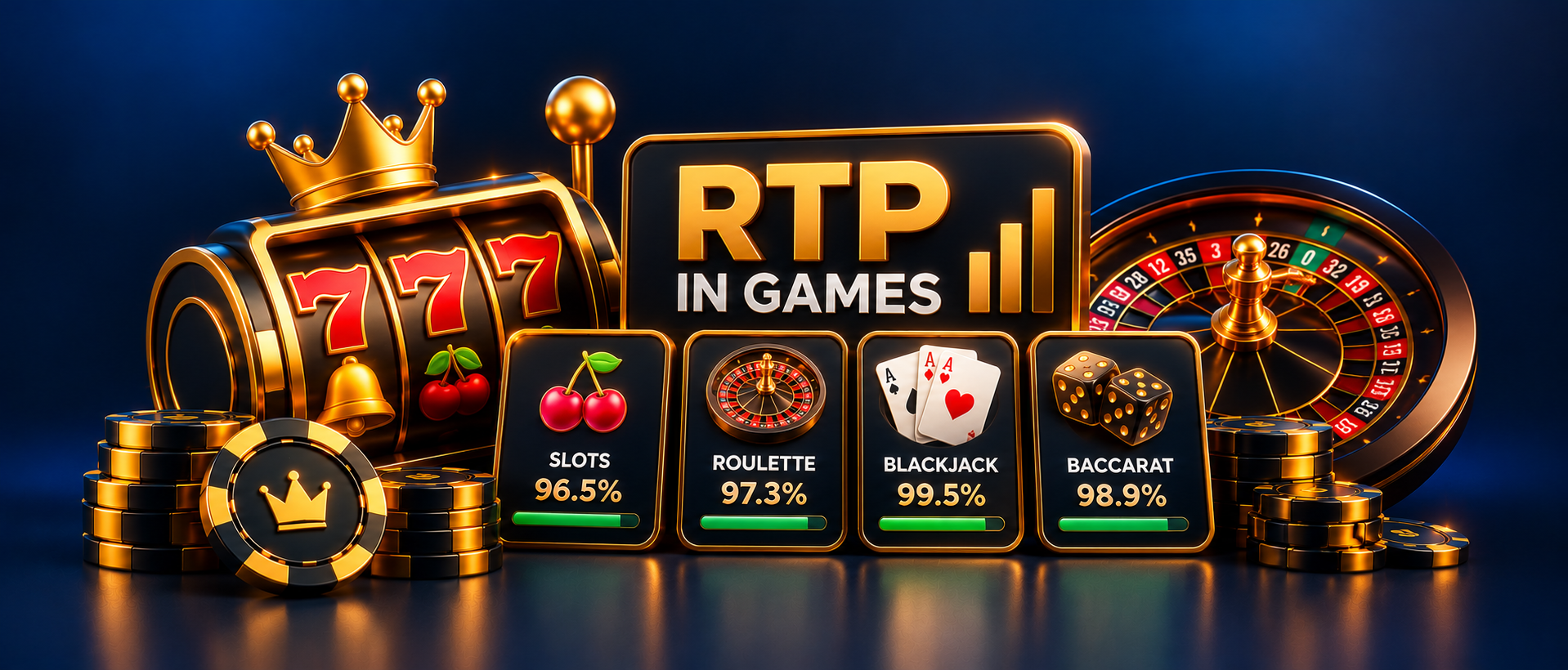
Fairness at a no license casino rests on the games, not on the local regulator, so the audit moves to the player: check who made the game, where it loads from and what return it declares. The four checks below cover that ground.
How to Read RTP Claims
RTP is the long-run share of stakes a game returns, and the honest source is the game’s own info panel, not the casino’s marketing. Open the paytable and compare the figure with the provider’s published version of the same title: many slots ship in several RTP configurations, and 96.2% at one casino can be 94.0% at another. Treat RTP as a statistical average over millions of rounds, useless for predicting a session, and treat any casino-wide claim like “98% payout on all games” as advertising until the per-game panels confirm it.
Provably Fair Crypto Games vs RNG Slots
Provably fair games, the originals at crypto casinos such as Stake and BC.Game, publish a hash of each round’s seed before the bet and let the player verify afterwards that the result was not altered. Verification is mathematical and needs no auditor. RNG slots from studios work differently: the random generator is certified by laboratories such as eCOGRA, iTech Labs or GLI, and trust flows from the provider’s certificate rather than from per-round proof. Both models are sound; what matters is which one covers the game you are playing, and that it actually does.
Provider Trust Signals to Verify
Three signals separate real provider catalogues from counterfeit ones:
- the game loads from the provider’s own domain, visible in the browser’s network panel, not from the casino’s server;
- the title appears in the provider’s public game list on its official site, with matching RTP and release data;
- recognised studios are present across the lobby, since Pragmatic Play, Hacksaw, NetEnt and Evolution license their content to vetted operators and pulled catalogues are a known sanction.
A lobby full of big names that all load from one unknown domain is the classic signature of cloned games.
Slots vs Live Casino Volatility
Volatility describes how a game pays, not how much. High-volatility slots concentrate the return in rare large hits and burn through short bankrolls; low-volatility slots and most live table games spread the return across frequent small results. Live roulette and blackjack also remove the cloned-game risk almost entirely, because the stream, dealer and studio branding are hard to fake. For a small bankroll at a new casino, low-volatility games double as a payment test: they keep the session alive long enough to reach a withdrawal and see how the operator handles it.
Taxes and Records for Brazilian Players

Tax obligations do not disappear with the local licence. Winnings remain income for a Brazilian tax resident, and money arriving from abroad leaves a trail that the Receita Federal can read; the practical answer is records, kept from the first deposit rather than reconstructed in March.
Record-Keeping for Tax Season
A usable record is a simple spreadsheet with one line per money movement: date, casino, direction, amount in reais, the Pix or crypto reference, and a running balance. Add monthly screenshots of the casino account balance and keep the e-mails confirming deposits and withdrawals. Kept monthly, the whole habit costs minutes; built retroactively across several casinos and a closed account, it can be impossible.
Cross-Border Payment Trails
Payments from offshore operators reach Brazilian accounts through local intermediaries, and banks file the movements they are required to report. A withdrawal arriving via Pix from a processor’s CNPJ is visible, identifiable and matchable against your declared income. Crypto adds a second layer: the Receita’s rules oblige reporting of operations through foreign exchanges above monthly thresholds, and chain analysis makes the trail durable. Assume every real that comes back to you is observable, and let the records explain it.
When to Seek Professional Advice
An accountant familiar with foreign income is worth the fee in specific situations: cumulative winnings that change your annual declaration, a single large payout, balances held in crypto across the year’s end, or any notification from the Receita about past movements. This guide describes practice, not tax law; the professional turns your records into a correct declaration, which is exactly why the records exist.
Disputes and Evidence Collection

Disputes at offshore casinos are won with evidence assembled before the problem, not after. The operator holds the balance and writes the rules, so the player’s leverage is documentation, escalation and publicity, in that order.
Documenting Every Critical Step
Five artefacts decide most cases: a dated screenshot of the balance before the withdrawal request, the request confirmation with its ID, the full support-chat transcript with a protocol number, the clause of the terms your claim relies on, and a PDF of the terms saved on the day you registered, since terms change silently. Store them outside the casino account, because a closed account takes its history with it.
Step-by-Step Escalation Path
Escalation follows a fixed ladder, each step documented:
- open a case in the live chat and insist on a protocol number;
- formalise by e-mail within 48 hours, attaching the evidence and citing the exact clause;
- set a clear response deadline of 7 days in the same message;
- file a complaint with the licensing authority through the channel published on the regulator’s site;
- post the case, with dates and numbers, on established player-report platforms.
Most paying operators resolve at steps one or two; the later steps exist to make ignoring you more expensive than paying you.
When to Walk Away
Some signals end the dispute rationally: a demand for a new “release fee” or tax before payment, terms rewritten after your win, support that stops answering across channels, or an amount too small to justify weeks of escalation. Walking away is not surrender; it is capping the loss, warning other players through a documented report and moving the bankroll to an operator from the table above.
Using Player Reports Wisely
Player reports are evidence about operators, read with method. Weigh recent reports over old ones, resolved cases over raw complaint counts, and specific narratives with dates and amounts over angry one-liners. Every large casino accumulates complaints; the diagnostic question is whether the operator answers and settles them. A brand with many resolved cases is usually a safer bet than one with a short, silent history.
Responsible Gambling for Offshore Play

Responsible play matters more offshore, because the safety net of a local regulator is gone and the only reliable limits are the ones you set yourself. Three layers do the work: money rules, self-observation and technical controls.
Bankroll Limits Before You Deposit
The bankroll is defined before the first Pix of the month, out of leisure money, and split into sessions:
- a fixed monthly ceiling, separated before any deposit;
- a session stake of 10% to 20% of the month’s ceiling, deposited once, with no mid-session top-up;
- a stop-loss: the session budget gone means the day is over;
- a stop-win: doubling the session stake triggers an immediate withdrawal of at least half.
For reference, a starting bankroll of R$300 split into ten sessions of R$30, with bets of R$3 to R$6, survives the variance of mid-volatility slots long enough to stay a game.
Behavioral Warning Signs
Warning signs are behavioural before they are financial: depositing to win back yesterday’s loss, hiding the activity from people close to you, playing with money set aside for bills, sessions stretching past the time you planned, and irritation when you try to stop. Any one of them is the cue to pause and tell someone; in Brazil, Jogadores Anônimos holds meetings nationwide and the CVV listens for free at 188, around the clock.
Limits, Blockers and Account Controls
Technical controls turn intentions into defaults. The better offshore casinos, including the leaders of our table, offer deposit limits, time reminders, cooling-off periods and self-exclusion in the account menu; set the deposit limit on day one, while the decision is cold. Outside the casino, blocking software such as Gamban or BetBlocker covers whole device families, and your bank’s gambling-block switch, where offered, stops the Pix before it leaves. Layered together, these controls fail far less often than willpower under a losing streak.
Final Checklist Before You Register
Run this list top to bottom; a casino that clears all ten points has passed the same bar as the brands in our comparison:
- licence number in the footer, and the seal’s validator shows the same domain;
- the company name brings up no unresolved payment scandals in recent reports;
- Pix works in both directions, with the payout window stated in writing;
- minimum deposit and minimum withdrawal fit your bankroll;
- bonus rollover is 50x or lower, with deadline, max bet and win cap published;
- KYC requirements are listed before registration, not revealed at the first payout;
- games load from recognised providers’ domains, with RTP visible per title;
- support answers in Portuguese within minutes and issues protocol numbers;
- deposit limits and self-exclusion exist in the account settings;
- your own records file is ready: a spreadsheet, a folder for screenshots, a saved PDF of the terms.
Ten yes answers do not remove every risk of playing without a local licence, but they remove the avoidable ones, and that is the difference the whole comparison is built to deliver.