











Offshore casinos are online gambling platforms licensed or registered outside the country where their customers live. For Brazilian players, offshore casino sites may operate under foreign licences, but a licence issued abroad does not automatically authorise an operator to offer gambling services in Brazil.
At brasil-cassinos.org, we explain how offshore casino operators differ from platforms authorised for the Brazilian market, what common licences mean, and which risks to assess before registering or depositing. We cover licensing, payment access, identity checks, withdrawals, dispute resolution, and consumer protection.
In 2026, the key step is to verify an operator’s status under Brazilian rules rather than relying only on its website claims. We recommend checking the licence issuer, the company named on the licence, the permitted markets, and the terms that apply to Brazilian customers. These checks help readers assess the legal position and practical risks before using an offshore casino.
What Is an Offshore Casino

An offshore casino is an online gambling platform operated by a company registered or licensed outside the country where its customers live. We distinguish the operator’s place of registration from its legal right to accept players in a specific market. A foreign licence may permit gambling services in the issuing jurisdiction, but it does not automatically authorise the same activity in Brazil.
Offshore vs. Unlicensed: What’s the Difference
An offshore casino and an unlicensed casino are not the same. The first operates from a foreign jurisdiction; the second lacks the authorisation required for the activity or market in question. A platform can hold a foreign licence and still be unauthorised to serve Brazilian customers.
When checking an offshore casino online, we recommend reviewing these points:
- Licence issuer: Check whether the regulator exists and publishes a searchable register.
- Registered operator: Confirm that the company named in the licence matches the casino’s legal documents.
- Website domain: Verify that the exact domain appears in the regulator’s records, where domain details are provided.
- Licence status: Check whether the authorisation is active, expired, suspended, or subject to review.
- Market restrictions: Read the applicable terms and local rules to determine whether customers from Brazil are eligible.
A logo or licence number displayed on a casino website is not sufficient proof of current authorisation. If a platform’s status cannot be verified, treat its licensing claims with caution.
Why Operators Choose Foreign Jurisdictions
Online gambling companies may register or seek licences abroad for several business and regulatory reasons. The choice depends on the jurisdiction’s legal framework, operating costs, compliance requirements, and target markets.
Common reasons include:
- Licensing frameworks: Some jurisdictions offer specific procedures for licensing remote gambling operators.
- Business costs: Registration, tax, and compliance costs vary between jurisdictions.
- International operations: A company may seek permission to serve customers in multiple markets, subject to each market’s laws.
- Payment infrastructure: Operators may choose jurisdictions that support their intended banking and payment arrangements.
- Corporate structure: A business may register its operating company in one country while managing other parts of its business elsewhere.
Foreign registration does not remove the operator’s obligations in the countries where it offers services. Players looking for offshore casino alternatives should compare licensing records, company details, payment rules, withdrawal terms, and access restrictions rather than relying on the jurisdiction alone.
Major Offshore Licenses
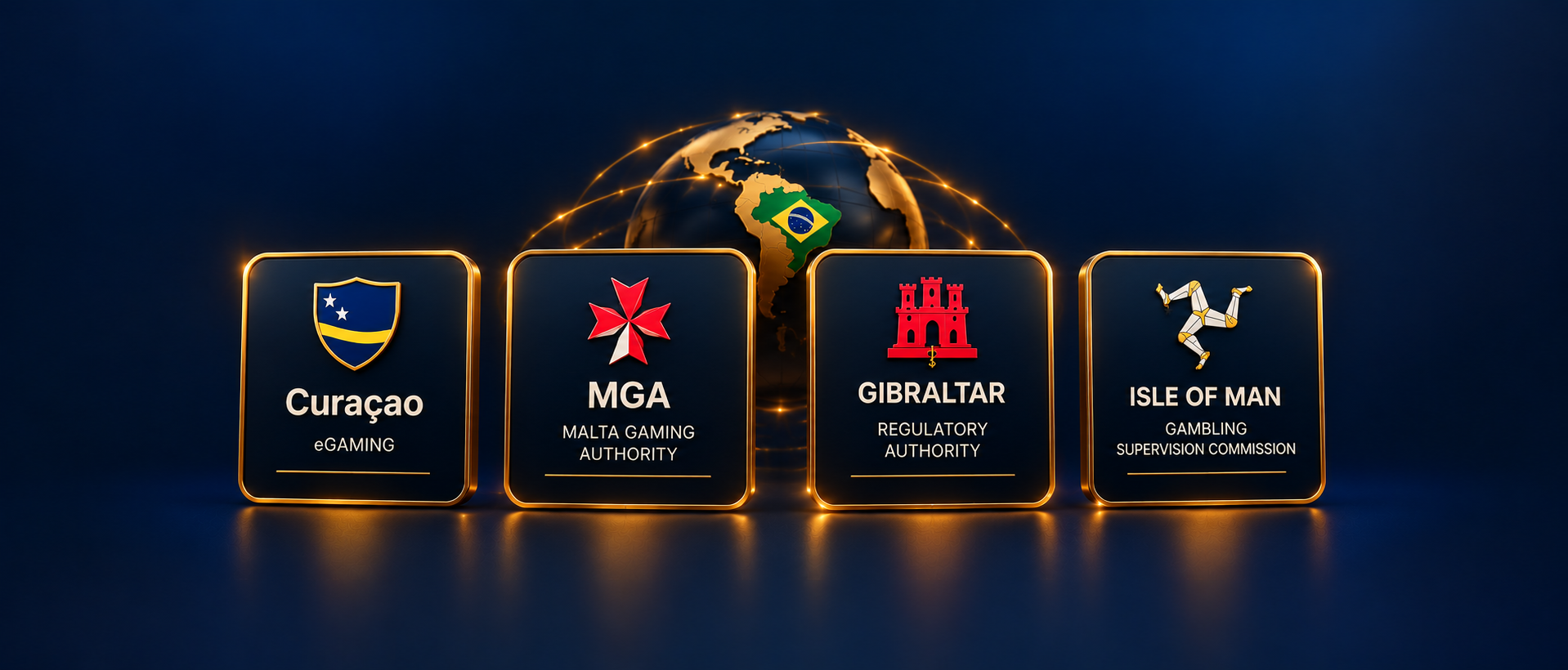
When we assess an online casino offshore, we check which authority issued its licence, what activities the licence covers, and whether the operator and website appear in the regulator’s records. The main jurisdictions differ in their licensing rules, oversight, and the level of protection available to customers.
Curaçao
Curaçao is a recognised jurisdiction for online gambling businesses. Its current framework is overseen by the Curaçao Gaming Authority (CGA). Operators must be assessed against the requirements that apply to their licence and business activities.
When reviewing an offshore casino site licensed in Curaçao, we check:
- The licence record. Search the CGA’s official resources and confirm the licence status.
- The operator’s identity. Match the company name in the register with the legal entity stated in the casino’s terms.
- The website domain. Check that the domain you plan to use is covered by the relevant authorisation.
- The permitted activity. Confirm that the licence covers the gambling products offered.
- The current status. Look for expiry dates, suspensions, or notices that may affect the operator.
A Curaçao licence is not automatic proof that a casino can legally serve customers in Brazil. Local restrictions still apply.
Anjouan
Anjouan, part of the Union of the Comoros, is another jurisdiction used by online gambling operators. Some casinos publish licence details linked to Anjouan’s licensing framework. Those details should be checked against the relevant public register rather than accepted solely on the operator’s website.
We recommend checking the following information:
- The licence number and registered company name.
- The domain or domains covered by the licence.
- The stated validity period and current status.
- The regulator or licensing body responsible for the record.
- The complaints process and any available information about dispute handling.
An operator’s claim that it holds an Anjouan licence does not establish that it meets every requirement in Brazil. Customers should also review local law and the platform’s terms before registering.
Malta and European Licenses
Malta is an established licensing jurisdiction for remote gambling. The Malta Gaming Authority (MGA) publishes information about licensed operators and the activities they are authorised to conduct. Other European countries have their own gambling regulators and licensing systems.
A licence from one European jurisdiction does not automatically authorise an operator to serve customers across the entire European Union or in Brazil. Gambling rules are set at national level, and cross-border access depends on the relevant legal framework.
When reviewing a casino with a European licence, we check the regulator’s official register, the legal entity, the approved website, and the scope of the authorisation. We also look for restrictions on the countries in which the operator may accept customers.
Kahnawake and Other Jurisdictions
Kahnawà, a Mohawk territory in Quebec, Canada, has regulated interactive gaming since 1999. The Kahnawà Gaming Commission issues different types of authorisations, including Client Provider Authorizations for companies offering online casino games, poker, or sports betting through its approved hosting facility. Its official website lists authorised operators and their domains.
Other jurisdictions also license online gambling businesses, but their regulatory systems are not interchangeable. We recommend the following checks when reviewing an offshore operator:
- Open the official regulator’s website rather than relying on a badge displayed by the casino.
- Search for the operator by company name, licence number, or website domain.
- Check the licence category and whether it covers consumer-facing gambling services.
- Review notices about suspensions, revocations, or unauthorised websites.
- Check whether the operator accepts customers from Brazil under applicable local rules.
For example, the Malta Gaming Authority provides a searchable register of licensees, while Anjouan Gaming publishes licence records with operator details, domains, and status information.
When comparing the best offshore casino sites, we give more weight to verifiable licence records and clear operator information than to the jurisdiction’s name alone. A foreign licence does not, by itself, establish that a platform is authorised to operate in Brazil.
How to Verify an Offshore Casino’s License

We recommend checking a casino’s licence directly with the issuing regulator before creating an account or depositing funds. The process is the same for a standard offshore gambling casino and an offshore crypto casino, even if the platform accepts digital assets instead of traditional payment methods.
- Find the licence details. Open the casino’s website and look for its legal information, usually in the footer, terms and conditions, or responsible gambling section. Note the licence number, issuing authority, and registered company name.
- Open the regulator’s official website. Find the regulator’s own register or licence verification service. Do not rely on a link provided by the casino alone. If the authority has no searchable register, look for official licence records or contact details that allow independent verification.
- Search for the operator. Enter the licence number or company name in the register. Check that the record matches the legal entity identified in the casino’s terms.
- Verify the domain. Compare the casino’s exact web address with the domain listed in the regulator’s records, where applicable. A valid licence held by one company does not prove that an unrelated website is authorised to use it.
- Check the current status and scope. Look for expiry dates, suspensions, restrictions, and the types of gambling covered. Also check whether the operator is permitted to accept customers from Brazil under the applicable rules.
- Keep a record of your checks. Save the regulator’s record or certificate and note the date you checked it. Licence information can change, so repeat the check if you return to the platform later.
Signs of a Fake License Seal
A licence badge on an offshore casino site is not proof of authorisation by itself. We look for inconsistencies between the badge, the casino’s legal documents, and the regulator’s records.
Warning signs include:
- No licence number. The site displays a regulator’s logo but provides no number or verifiable details.
- An invalid register entry. The stated number cannot be found in the regulator’s official records.
- Different company names. The operator shown on the casino website does not match the company listed on the licence.
- An unlisted domain. The licence covers a different website, and the current domain is not confirmed by the regulator.
- Expired or suspended authorisation. The register shows that the licence is no longer active or is subject to restrictions.
- A copied certificate. The displayed document contains inconsistent dates, company details, or licence information.
- Pressure to deposit. The site encourages immediate payment but makes its legal details difficult to verify.
If we cannot confirm a licence, we do not treat the casino as verified. We recommend avoiding deposits until the discrepancy is resolved. This applies equally to platforms that advertise cryptocurrency payments, fast withdrawals, or access without extensive identity checks. Such features do not replace valid authorisation or provide proof that an operator is trustworthy.
How We Choose Offshore Casinos

We assess each casino offshore using verifiable information about its licence, operating company, payment rules, and customer terms. Our aim is to help readers compare platforms using consistent criteria rather than promotional claims.
- Licence and regulatory status. We check the regulator’s official register for the licence number, registered company, covered website domain, and current status. If we cannot confirm the details independently, we do not present the licence as verified.
- Legal access in Brazil. A foreign licence does not automatically permit a casino to accept Brazilian customers. We consider the applicable Brazilian rules and distinguish a licence issued abroad from authorisation to operate in the local market.
- Company transparency. We look for the operator’s legal name, registered address, contact details, terms and conditions, privacy policy, and complaints procedure. Missing or inconsistent company information makes independent checks more difficult.
- Deposits and withdrawals. We review the available payment methods, minimum transaction amounts, fees, processing times, and withdrawal conditions. We also check whether identity verification is required and whether the payment account must match the registered customer’s details.
- Bonus conditions. We examine wagering requirements, expiry dates, eligible games, maximum bet limits, and withdrawal restrictions. A large advertised bonus may have limited practical value if its conditions are difficult to meet.
- Account security and privacy. We check whether the platform explains how it protects account access and handles personal information. We also review its identity verification policy and the process for reporting suspicious activity.
- Customer support and dispute handling. We look for accessible support channels and clear instructions for submitting complaints. Where available, we check whether the regulator provides a formal dispute process for customers.
- Game and software information. We review the stated game providers, available categories, and any information about testing or certification. Claims about fairness should be supported by identifiable providers or independent testing records.
These criteria help answer questions such as how to choose the best online casino and how to choose a trusted online casino. We apply the same checks to a casino offshore that accepts traditional payments and one that offers cryptocurrency transactions. No single licence or feature guarantees a safe experience, so we recommend verifying the available evidence before registering or depositing funds.
Offshore Casinos vs. bet.br Casinos

We compare offshore casinos with platforms authorised under Brazil’s regulated betting system, commonly identified by the .bet.br domain. The main differences concern local authorisation, regulatory oversight, consumer protection, payment rules, and the procedures available when a dispute arises.
| Comparison point | Offshore casinos | bet.br casinos |
| Regulatory status | May hold a licence from a foreign jurisdiction, but that licence does not automatically authorise operations in Brazil. | Operators must hold the relevant Brazilian federal authorisation to operate legally in the regulated fixed-odds betting market. |
| Website domain | May use international domains such as .com or other extensions. The domain alone does not prove licensing status. | Federally authorised fixed-odds betting operators use the .bet.br domain. |
| Regulatory oversight | Oversight depends on the foreign licensing authority and the scope of its rules. Enforcement across borders may be more difficult. | Subject to applicable Brazilian federal rules and oversight by the Ministry of Finance’s Secretariat of Prizes and Bets. |
| Consumer protection | Available protections depend on the licence, operator policies, and the authority responsible for handling complaints. | Must comply with applicable Brazilian requirements for authorised operators, including consumer protection and responsible gambling rules. |
| Deposits and withdrawals | Payment methods, currencies, fees, and processing times vary by operator and payment provider. | Payments must follow the applicable Brazilian rules, including requirements governing permitted payment methods and transactions. |
| Identity verification | Requirements depend on the operator’s licence and policies, as well as any applicable legal obligations. | Operators must follow Brazilian identity verification and customer registration requirements. |
| Dispute resolution | Customers may need to contact a foreign operator or licensing authority. The available remedies depend on the jurisdiction. | Customers can use the operator’s complaint process and applicable Brazilian consumer protection or regulatory channels. |
| Sports betting and casino games | Product availability depends on the operator’s licence and the laws of the markets it serves. | Federal authorisation for fixed-odds betting does not automatically permit every type of online casino game. The authorised activities and applicable rules must be checked separately. |
| Legal access in Brazil | A foreign licence alone does not establish that the platform may legally accept Brazilian customers. | The operator should appear on the relevant official list of authorised companies and use its approved domain. |
How to Use This Comparison
When assessing the best offshore casino or the best offshore casino online, we recommend checking the following before registering:
- Verify authorisation. Search the official Brazilian government records for the operator and confirm its approved domain.
- Check the product type. Confirm whether the platform offers sports betting, online casino games, or both, and whether the relevant activity is legally authorised.
- Review payment conditions. Check accepted deposit methods, withdrawal rules, fees, and identity verification requirements.
- Read the terms. Look for restrictions on Brazilian customers, bonus conditions, account closure rules, and complaint procedures.
A foreign licence is not equivalent to Brazilian authorisation. For customers in Brazil, verifying the operator’s legal status and the activities it may offer should come before comparing bonuses or payment options.
Legal Status of Offshore Casinos in Brazil

Brazil’s legal framework for online gambling changed in September 2026. According to the Ministry of Finance, Provisional Measure No. 1,394, dated September 25, 2026, prohibited the operation, offering, and advertising of fixed-odds betting throughout the country. This changes the position described under the earlier licensing framework, so readers should check current legislation and court decisions before relying on older information.
When assessing whether an offshore casino is casino online legal in Brazil, we recommend checking these points:
- Current federal rules. Read the latest legislation and official notices from Brazil’s Ministry of Finance. Rules that applied to authorised operators earlier in 2026 may have changed.
- Foreign licence. An offshore casino license shows that an operator may have authorisation in another jurisdiction. It does not override Brazilian law or independently establish permission to serve Brazilian customers.
- Brazilian authorisation records. The Ministry’s published list of authorised operators reflects the earlier regulatory framework. Because the September 2026 measure changes that framework, the list should not be treated on its own as proof that operations remain permitted.
- Court decisions and legal challenges. Some operators may obtain temporary judicial relief. For example, a federal court ruling reported on October 8, 2026, allowed Stake to continue operating until October 25, subject to the terms of that decision. A ruling affecting one company does not automatically apply to other casinos.
- Scope of the service. Check whether the platform offers sports betting, casino games, or other gambling products. The legal treatment may depend on the product and the rules currently in force.
- Customer protection. Review withdrawal terms, complaint procedures, and the operator’s legal details. A foreign licence does not guarantee that Brazilian customers can recover funds through local regulatory channels.
Until the legal position becomes clearer, we recommend checking official updates and relevant court decisions before treating any offshore platform as a legal online casino for customers in Brazil.
Payments at Offshore Casinos

Payment options at an offshore online casino depend on the operator, its banking partners, the customer’s location, and the rules that apply to the account. We compare casino payment methods by availability, transaction speed, fees, limits, and the conditions for withdrawing funds. Payment availability does not, by itself, confirm that a casino is authorised to serve customers in Brazil.
| Payment method | Typical processing time | Possible fees | Main checks before depositing | Withdrawal considerations |
| Bank transfer | From the same day to several business days | Bank or intermediary fees may apply | Confirm supported banks, transfer limits, and beneficiary details | International transfers may require extra processing time and account verification |
| Credit or debit card | Deposits are often processed quickly; withdrawals vary | Card issuer or operator fees may apply | Check supported card networks and whether gambling transactions are permitted | Some operators cannot return funds directly to the card used for deposits |
| E-wallets | Often fast for deposits; withdrawals depend on the provider | Provider or currency conversion fees may apply | Confirm that the wallet is supported and registered in your name | Withdrawals may be limited to the original payment method |
| Cryptocurrency | Network confirmation time varies by asset and blockchain | Network fees and possible conversion costs | Check the accepted coin, network, minimum amount, and deposit address | Transactions are generally irreversible; the casino may apply separate withdrawal limits |
| Local payment services | Depends on the service and provider | May include transaction or conversion charges | Verify local availability, account eligibility, and transaction limits | Withdrawal support may differ from deposit support |
| Prepaid vouchers | Usually quick for deposits | Purchase or service fees may apply | Check whether the voucher can be used for gambling transactions | Many vouchers support deposits only, so another withdrawal method may be required |
What to Check Before Making a Payment
We recommend reviewing these details before using any of the online casino payment methods listed above:
- Deposit and withdrawal limits. Check the minimum and maximum amounts for each transaction, including any daily or monthly caps.
- Fees and exchange rates. Review charges from the operator, bank, wallet, or payment provider. Currency conversion can affect the amount credited or received.
- Processing times. Separate the operator’s approval time from the time required by the bank or payment network.
- Account ownership. Confirm whether deposits and withdrawals must use a payment account registered in your own name.
- Verification requirements. Check which identity and source-of-funds documents may be requested before a withdrawal.
- Payment restrictions. Read the terms for failed deposits, pending transactions, refunds, and changes to the original payment method.
- Legal status. Verify the operator’s authorisation and whether it may legally provide the relevant service in Brazil. A foreign licence or a supported payment option does not establish local authorisation.
Payment methods should be assessed alongside licensing, withdrawal conditions, and dispute procedures. We recommend confirming the full transaction terms before transferring money to an offshore casino.
Risks of Gambling at Offshore Casinos

Gambling at an offshore casino can involve legal, financial, and data security risks. We recommend checking the operator’s licence, payment terms, privacy rules, and complaint procedures before creating an account or depositing money. A foreign licence does not automatically authorise a casino to operate in Brazil or guarantee that customers can recover funds if a dispute occurs.
- Unclear legal status. A casino may hold a licence in another jurisdiction but lack authorisation to serve customers in Brazil. Check current Brazilian rules and official records before using the platform.
- Limited dispute options. If an operator delays a withdrawal, closes an account, or disputes a win, the customer may need to contact a foreign regulator. The available remedies depend on the licence and the authority’s jurisdiction.
- Withdrawal restrictions. Operators may impose minimum and maximum withdrawal amounts, identity checks, processing periods, or restrictions on payment methods. Read these conditions before depositing.
- Unclear bonus terms. Promotional offers may include wagering requirements, expiry dates, maximum cash-out limits, and game restrictions. Review the full terms rather than relying on the advertised bonus amount.
- Personal data risks. An operator’s privacy policy should explain what information it collects, how it uses that information, and whether it shares data with service providers. Weak security practices can expose account details and identity documents.
- Unverified games and results. If information about game providers, testing, or random number generation is missing, customers may have limited ways to assess how games are operated.
- Payment and currency costs. International transfers, cryptocurrency transactions, and currency conversion may involve fees. Crypto transfers are generally irreversible, so an incorrect address or network can result in lost funds.
- Account restrictions. Operators may suspend accounts or request additional documents under their terms. Check the verification policy and the conditions for account closure before registering.
How to Assess Casino Safety
When considering how to choose a trusted online casino, we suggest checking several factors rather than relying on a logo or a licence badge.
- Verify the licence. Search the regulator’s official register for the operator’s legal name, licence number, website domain, and current status.
- Check Brazilian legal requirements. Confirm whether the operator is permitted to offer the relevant gambling product to customers in Brazil.
- Review withdrawals. Look for clear processing rules, fees, limits, and verification requirements.
- Check company details. Confirm the registered business name and look for accessible terms, privacy policies, and complaint channels.
- Assess account security. Review available login protection and how personal information is handled.
- Read independent information carefully. Treat user reviews as supporting evidence, not proof of licensing or fair play.
People searching for how to choose the best and safest online casino should apply the same checks to every operator, including platforms that accept cryptocurrency. To assess how to choose a safe online casino, start with its legal status and withdrawal conditions, then review its security and dispute procedures.
We recommend avoiding platforms whose licence, operator identity, or payment terms cannot be verified.
Complaints: Where to Turn

When a dispute arises with an offshore casino, we recommend following a documented process before escalating the complaint. The available options depend on the operator’s licence, the country where it is registered, and the legal rules that apply to the customer in Brazil.
- Contact the casino’s support team. Submit the complaint through the official website or account support channel. State the issue clearly, whether it concerns a delayed withdrawal, account restriction, disputed result, or bonus condition. Include the transaction date, amount, and relevant account details, but do not send passwords or full payment credentials.
- Keep supporting evidence. Save copies of messages, transaction receipts, account statements, the applicable terms and conditions, and screenshots showing the disputed activity. Record the complaint reference number and the date of each response. These records can help if the matter is referred to an external body.
- Check the licensing authority. Find the regulator named in the casino’s licence details and verify that the licence belongs to the same company and website. Consult the authority’s official website to determine whether it accepts customer complaints and what documents it requires. A regulator may have limited powers over disputes involving customers outside its jurisdiction.
- Use the relevant Brazilian consumer channels. If the issue falls within their remit, consumers may seek information or assistance through Brazil’s consumer protection agencies, such as Procon, or the federal consumer complaint platform Consumidor.gov.br. Their ability to act on a foreign gambling operator depends on the circumstances and the operator’s presence or legal obligations in Brazil.
- Contact your payment provider where appropriate. For a card payment or bank transfer, ask the provider whether a dispute, recall, or chargeback procedure applies. These options are subject to payment network rules and deadlines. Cryptocurrency transfers generally cannot be reversed through the blockchain itself.
- Consider legal advice. If a substantial sum is involved or the complaint remains unresolved, a qualified legal professional can assess jurisdiction, applicable law, and possible remedies. Do not assume that a foreign licence creates a straightforward route to compensation.
Responsible Gambling at Offshore Casinos

Responsible gambling means setting clear limits on time and money spent on gambling and recognising when betting starts to affect daily life. We recommend checking which responsible gambling tools an offshore casino provides before opening an account. These features can help manage activity, but they do not replace legal oversight or confirm that an operator is authorised to serve customers in Brazil.
- Deposit limits. Set a maximum amount you can deposit over a day, week, or month. Check whether limits take effect immediately or after a waiting period.
- Loss limits. Where available, use limits to restrict the amount you can lose during a set period. Check how the operator calculates losses and when the limit resets.
- Session and time limits. Set a maximum session length or use reminders to monitor how long you have been playing. Take breaks rather than extending a session to recover losses.
- Temporary time-outs. Some operators let customers suspend access to their accounts for a defined period. Check the duration and the conditions for restoring access.
- Self-exclusion. This option restricts gambling access for a longer period. Before relying on it, review its scope and whether it applies only to one operator or across a wider system.
- Account activity records. Review deposits, withdrawals, bets, and losses regularly. Transaction history can help you compare actual spending with your budget.
- Marketing controls. Check whether you can disable promotional emails, messages, and bonus notifications. Reducing these prompts may help limit unplanned gambling.
- Support resources. Look for contact details for independent gambling support services and information about seeking help if gambling becomes difficult to control.
Legal Status and Player Protection
Responsible gambling features do not determine whether an online casino is legal in Brazil. We recommend checking current Brazilian legislation and official regulatory notices before using an offshore platform. A foreign licence may impose its own player protection requirements, but it does not automatically grant permission to offer gambling services in Brazil.
Customers should also read the operator’s rules for setting limits, closing accounts, and requesting self-exclusion. If these policies are unclear or difficult to access, treat that as a reason to review the platform carefully before depositing funds.
We recommend setting spending limits in advance, avoiding borrowed money, and stopping when gambling no longer fits your budget or planned leisure time.
Conclusion
At brasil-cassinos.org, we explain how offshore casinos operate, how their licences differ, which payment conditions to review, and where customers can turn when disputes arise. We recommend verifying an operator’s legal status in Brazil before registering or depositing funds, since a foreign licence does not automatically authorise local operations. Checking withdrawal rules, account security, complaint procedures, and responsible gambling tools helps readers make informed decisions and assess the risks before choosing an online gambling platform.